
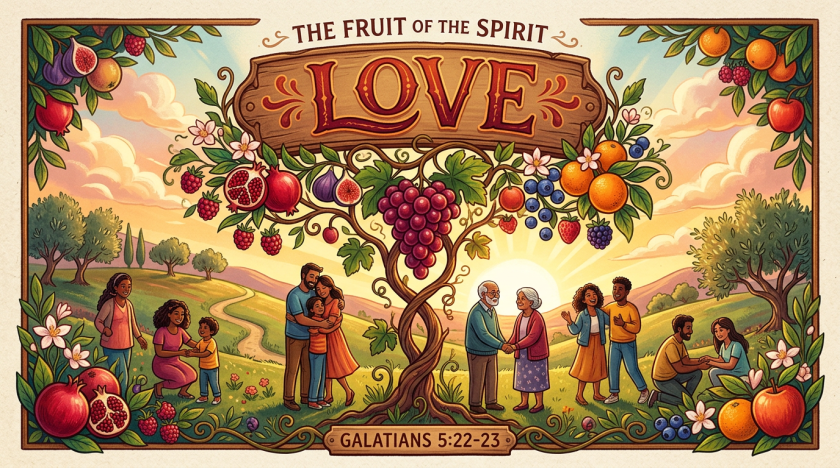
Galatians 5:22-23. But the fruit of the Spirit is love, joy, peace, patience, kindness, goodness, faithfulness, 23 gentleness, self-control; against such things there is no law.
Love—Agape
It is likely true that Paul begins his list of spiritual virtues with love because it is the premier character trait of the Christian life. God Himself is defined as love—God IS love (1 John 4:8, 16). Therefore, the Spirit IS love also, for the Spirit is God.
The word agape is one of four Greek words for love. This is the word that the Apostles chose to use as the definition of God’s divine love. It is the love of self-sacrifice and unconditional grace. Agape love means putting another person’s needs above your own, simply because of their intrinsic value. It is loving others because of who they are, not because of what they do (or can do for you). Agape is how God loves us, and how we are to love God.
Counterfeit love* often means loving someone because of what they can give back to you, or because of the way it makes you feel. Selfish affection, rescuing, attraction, and duty can all be fake versions of love.
Love’s opposite is fear. Self-protection, self-promotion, and just plain selfishness all flow from fear and destroy love. Basically, everything Paul has told us in Galatians about the flesh and living under the law—these are the opposite of love.
Deep love flows from faith (“faith working through love,” Galatians 5:6), while shallow love is rooted in attachment. In fact, this is why our Buddhist friends would say love always leads to sorrow. Attachments are broken, and then we are inevitably sad. To avoid sorrow, avoid attachment.
But agape love goes far beyond attachment. It is rooted in hope and faith. Love without a foundation of hope (knowing that we have a secured, eternal future with God and His love) and faith (trusting this future of love) will collapse on itself. It will have no real strength and bring no real joy. Loving from hope and faith, however, can be true, pure, and selfless. How? Because when I know and trust in my future of love—God’s eternal, never-ending, abounding love—then I can freely love without limits and without fear, with nothing to lose.
You: How deep is your love? What fears get in the way of you loving deeply?
You in Christ: How does knowing we have the hope of Christ’s love allow us to love without fear and without shallow attachment?
Christ in you: How can you practice Christ’s agape love today?
Pray: Father, You are love and your love lives in me by the Spirit of Christ. I trust this with all my heart. Let this love flow out of me I pray. Amen.
* The ideas of counterfeit fruit and the fruit’s opposite are taken from Timothy Keller’s book “Galatians For You” (2013). For each of the nine fruit I will be borrowing these categories from that book.

