
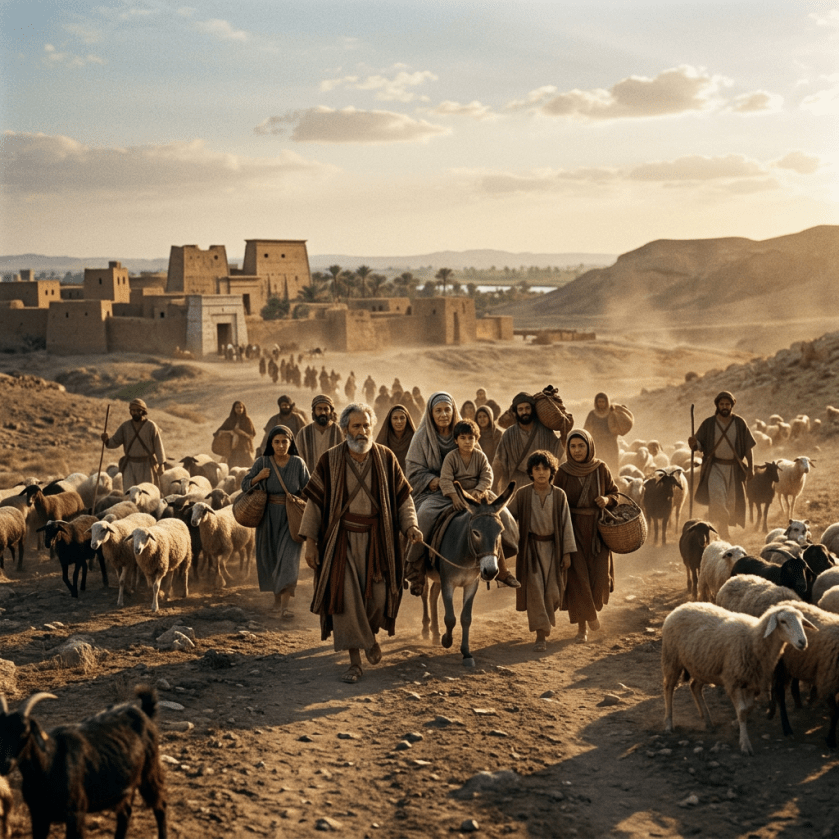
Genesis 13:1-4. 1So Abram went up from Egypt, he and his wife and all that he had, and Lot with him, into the Negeb. 2Now Abram was very rich in livestock, in silver, and in gold. 3And he journeyed on from the Negeb as far as Bethel to the place where his tent had been at the beginning, between Bethel and Ai, 4to the place where he had made an altar at the first. And there Abram called upon the name of the Lord.
What do you do with your failures, especially your spiritual failures? How do you respond to those moments or even seasons of life where you have failed to trust and obey God? What do you do after you have wandered into Egypt?
There’s no doubt that Abraham’s journey in Egypt was a mistake. Not only is Egypt itself symbolic of worldliness, but the land of Egypt brought out the worst in Abraham. Abraham left the Promised Land behind and then, in the lust for material gain, he almost lost his wife to the lust of the Pharaoh. Only God intervened. In a foreshadowing of Exodus, God sent a plague to make it clear to Pharaoh that he was to let God’s people go. Abraham and Sarah not only left, they left with incredible wealth.
Genesis 12:16. And for her sake he dealt well with Abram; and he had sheep, oxen, male donkeys, male servants, female servants, female donkeys, and camels.
In spite of his incredible foolishness and lack of trust, God blesses Abraham beyond his wildest dreams. The riches of the Pharaoh become the riches of Abraham. Just as the children of Israel will plunder the Egyptians at the Exodus, here Abraham has plundered Egypt in his own mini-exodus.
But this isn’t just a rescue story, it’s a repentance story. Can Abraham find his faith in God again? And what will allow him to do so?
In Romans 2, the Apostle Paul reminds us that it is the kindness of God that leads us to repentance. Abraham is a living example of this truth. The Egypt debacle appeared to have risked it all. But the truth is that when you are living within the covenant promises of God, all risk is eliminated by his amazing grace and mercy. God works all thing together for the good. Even our worst of decisions and most detrimental of detours.
Genesis 13:1-4 simply tells us the facts. But the facts can also tell us what was likely happening in Abraham’s heart. Abraham’s return journey to Canaan is step by step a reversal of his road to Egypt. From Egypt to the Negev. From Negev to Bethel-Ai, all the way back to the same altar he built weeks or months earlier. Abraham has come full circle, back to the place where he had called upon the name of the Lord.
This is Abraham’s repentance. His reversal. His return to God. Did Pharaoh kick Abraham out of Egypt? Yes. Did he have no choice but to leave and return to Canaan? Maybe. But did he have to retrace his steps back to the altar? No. But he did. Why did he? Because his faith in God was rooted in very real actions by God, including his new found material blessings from Egypt, in spite of his gross selfishness.
This undeserved kindness of God allowed Abraham to return. Remember, his original question before heading south to Egypt was, will this land actually keep me and my family alive? Will God actually keep me alive? Now Abraham knows that the answer is yes. Even when I don’t fully trust this God, this God will be fully trustworthy. And with that the trust grows. The faith increases.
In Christ, we are given a path back home in times of failure. Sadly, many never learn how to return to God through grace and kindness. They either return to him from fear or guilt, or they refuse to ever accept that they did anything wrong in the first place.
Many Christians have never really learned how to deal with sin through their union with Christ and his grace. They use repentance as a bar of soap to keep the conscience clear before God.
Sin – Face consequences – Confess – feel better – repeat.
But this is not how we learned Christ (or Abraham). Abraham did not face the consequences of his sin, Pharaoh did. He wasn’t plagued, Pharaoh was. He didn’t lose Sarah, Pharaoh did. He didn’t lose possessions and wealth, Pharaoh did. In a very real way, Pharaoh is Abraham’s substitute taking all the consequences for Abe’s sin, while Abraham receives the blessing. Sound familiar? In Christ, we have gained every blessing of Heaven all because Jesus lost it all for us.
And how did this grace of God motivate Abraham? It motivated him all the way home, back to the altar. Not from fear but from faith. Faith in the kindness of God that proves again that he can be trusted in all things.
How does the grace of Christ motivate you? Does it drive you toward God or away? Does it allow you to return to the place of rest, to your first love? Does it give you a license to sin more, or does it remind you that you never have to sin again. Why not? Because when you have it all in Christ, then why would you ever need anything less than Christ to give you more?
You: What motivates your repentance (do you repent)? Is it God’s kindness?
You in Christ: How does knowing that we have it all in Christ keep us from seeking more from those gods who can’t truly supply?
Christ in you: How might you exercise faith in the kindness of Christ today? Be specific.
Prayer: Father, in this life I always feel like I’m missing out, but your kindness is totally sufficient. Let Jesus be all I need today and every day. Amen.
 To Live is Christ