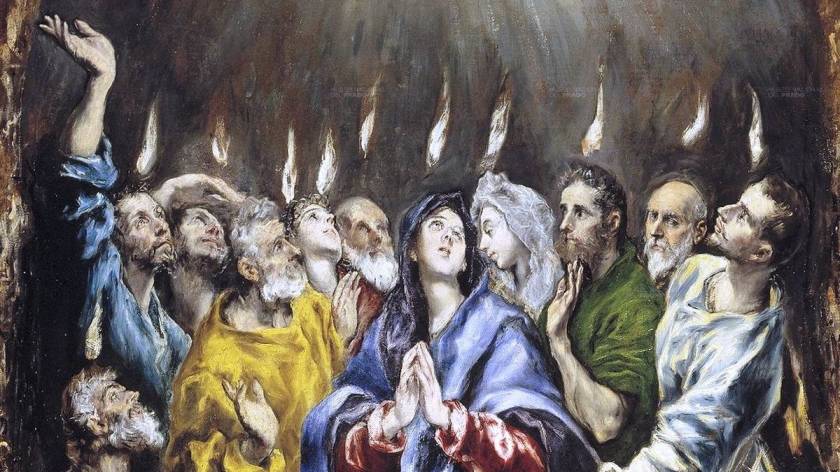
Acts 2:5-8. 5Now there were dwelling in Jerusalem Jews, devout men from every nation under heaven. 6And at this sound the multitude came together, and they were bewildered, because each one was hearing them speak in his own language. 7And they were amazed and astonished, saying, “Are not all these who are speaking Galileans? 8And how is it that we hear, each of us in his own native language?
Have you ever needed a reversal? Not just a second chance, but a complete 180 degree turn? That’s exactly what all of humanity needed at Pentecost.
Do you remember the story of the Tower of Babel? It was one of the most important events in human history. After the flood, mankind refused to spread over the Earth and multiply God’s love and grace, and instead they attempted to “make a name for themselves,” and build a tower to Heaven. The rulers at Babel were sending humanity down a very dark path, just like before the flood. There needed to be a complete reversal.
The Tower of Babel is a glaring picture of all works based religion. Man desperately moving up, up, up to get to God, building our stairways to heaven. Forming our own identities. Controlling our own destinies. Working our way to meaning and immortality. All the antithesis of God’s gracious offer of life. And so God will graciously respond. How? By coming down to us.
Genesis 11:5. And the Lord came down to see the city and the tower, which the children of man had built.
How did God respond at Babel when he came down? Language confusion. Forced dispersion. Why? Is God anti-unity? Anti-cooperation. Not at all. But he is anti-oppression. Many scholars point out that Babel’s tower was not an act of communal cooperation, but an oppressive empire trying to subjugate surrounding people, forcing a common language on them, and using them as brick making slaves. Therefore, the confusion of languages at Babel was not only a punishment for the kings of Babel, but a mercy for the enslaved at Babel. The language differences made them useless to their taskmasters.
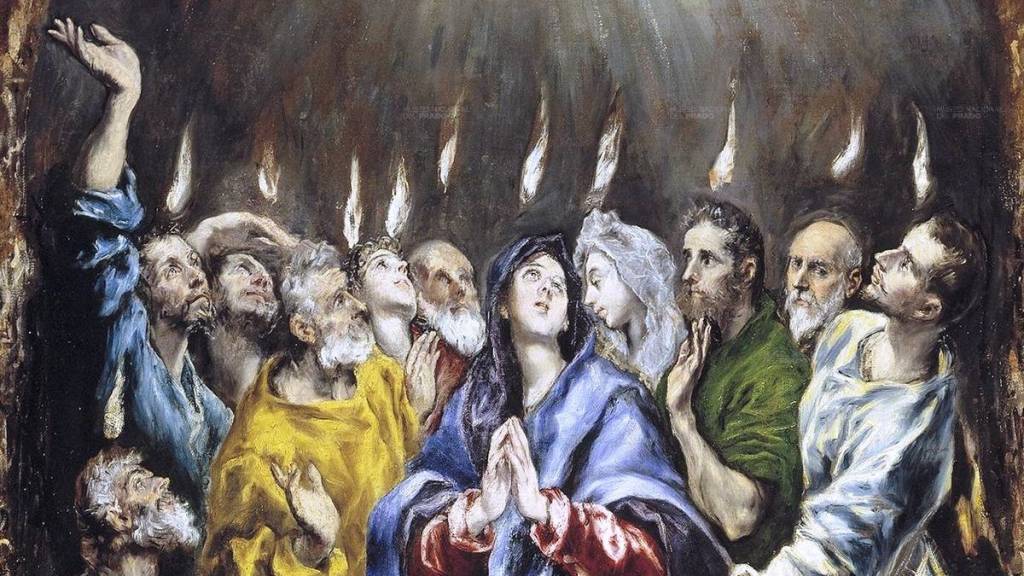
At Pentecost, God will come down again to confront his people. And how did God respond at Pentecost when the Spirit came down in tongues of fire? He responded with a reversal of Babel.
At Babel, humanity was moving away from God, while trying to reach Heaven. They rejected God and his offer of life by grace through faith. The result was confusion and separation. But at Pentecost, humanity moves toward God in repentance and faith. Three thousand saw their need for a Savior, Jesus, and received his outpouring of love by the Holy Spirit’s powerful anointing of “all flesh” (Joel 2). The result was understanding and unification.
At Babel, the people wanted to make a name for themselves. At Pentecost, people will proclaim the name of Jesus.
At Babel, the people wanted to be known for doing a great thing. At Pentecost, each person heard in their own language the “great things God had done” (Acts 2:13).
At Babel, the people (or at least the rulers) wanted to prevent the scattering of the people. At Pentecost, God will launch a missions movement into the whole world, spreading the gospel to the nations, every tribe and tongue.
At Babel, God separated humanity into different cultures and nations to prevent working for the glory of man through the oppression of man. At Pentecost, God unified humanity in the Spirit to work for the glory of God through the freeing of all mankind from their bondage to sin and death.
What’s interesting about Pentecost is that the Spirit didn’t reverse the diversification of languages and cultures. He didn’t make everyone speak the same language. He caused everyone to hear in their own language.
One Spirit. Many languages.
What does all this mean for us who are in the Spirit? It means that God values our diversity. God didn’t eliminate diversity, he brought unity within diversity. The church is not meant to be uniform. It’s meant to be united in Christ. Cultural and even linguistic differences still exist, probably in your local church, but we are called to resist building a church around the dominant earthly culture and instead to create a culture built around the call of Christ – make disciples of every nation.
Where Babel was all about human effort, Pentecost is all about God’s grace. God came to us. Again. Not for the first time and not for the last. And as God has come to us with his gracious Spirit to indwell us, heal us, transform us, and empower us, may we go to the world in this same power of grace and truth. May we take the message of the hope of Jesus to all who would have ears to hear and hearts to believe.
You: In what ways do you tend to live like Babel – making a name for yourself?
You in Christ: In Christ we are united by the Spirit. In what ways does your unity with other believers impact the choices you make each day?
Christ in you: In what ways can you celebrate unity in diversity in your local church?
Prayer: Father, unifying Spirit lets me love all my brothers and sisters in Christ, even those whose culture is different from mine. By the power of the Spirit’s grace and truth let me strive for peace and for the spread of the gospel to all mankind. Amen.

