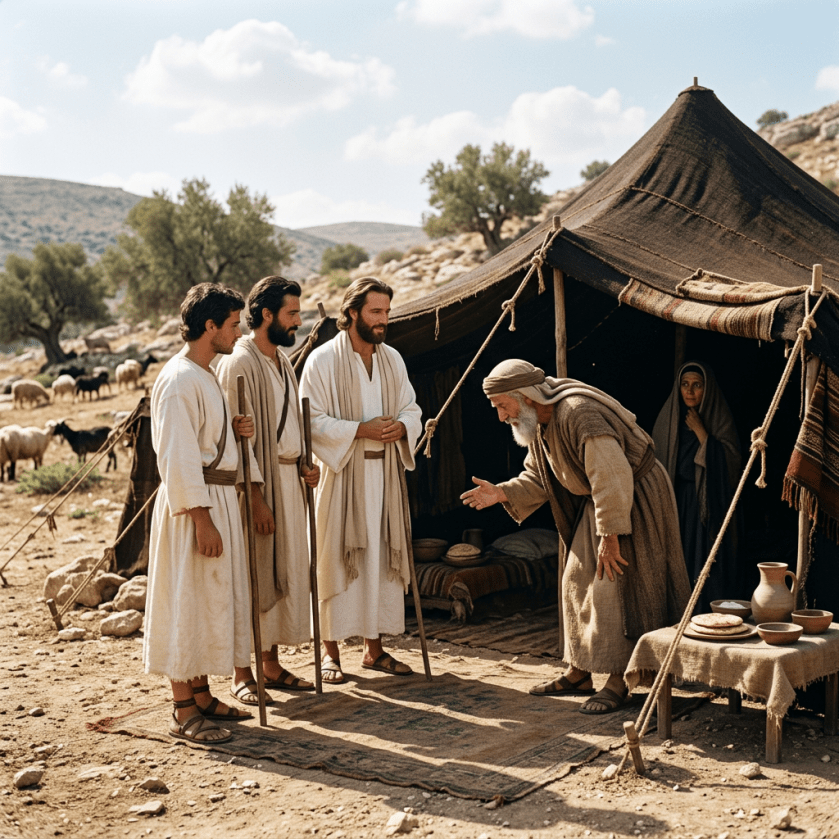
Genesis 18:16-19. 16Then the men set out from there, and they looked down toward Sodom. And Abraham went with them to set them on their way. 17The Lord said, “Shall I hide from Abraham what I am about to do, 18seeing that Abraham shall surely become a great and mighty nation, and all the nations of the earth shall be blessed in him? 19For I have chosen him, that he may command his children and his household after him to keep the way of the Lord by doing righteousness and justice, so that the Lord may bring to Abraham what he has promised him.”
Righteousness and justice.
Tsedeq and mishpat.
These are two of the most important words in the Old Testament. They occur side by side nearly fifty times in scripture. Together they form one larger concept that gives us the purpose of the believer living in a fallen world. But first and foremost, righteousness and justice are the character of God himself.
Psalm 89:14. Righteousness and justice are the foundation of your throne; steadfast love and faithfulness go before you.
OK, so these words are a big deal, but what do they mean?
Righteousness. In the Old Testament, righteousness was primarily something you DO – keep the way of the Lord by doing righteousness and justice. Righteousness, therefore, meant upholding the standards of God in creation: goodness through serving and keeping, dominion and authority, imaging God in all his kindness and integrity. And, of course, love. To do righteousness was to love God and neighbor. Further, for Abraham and his descendants, righteousness meant keeping covenant with God – obeying the specific commands that followed upon the heels of God’s grace, such as circumcision.
Justice. If doing righteousness is living within God’s creation standards, then doing justice is returning to those standards when we fall short. To do justice is to restore, to heal, to fix, to return a society, community, or family to righteousness. To fairness. To equality. To shalom and flourishing. This is why God’s call for justice is always aimed at helping the poor and needy, the widow and orphan, the stranger and outsider, the slave and the oppressed. Such justice is called restorative justice. Justice that restores a person to a place of righteous living, including the repentant unrighteous sinner.
But what about the unrepentant sinner? They must and will receive God’s punitive justice. Separation from the society, community, family, and from God himself. This separation assures that the group can be restored. The unrepentant sinner is removed so that the repentant sinners may flourish in righteousness.
Genesis 18 completes God’s pattern of sanctification. First God graciously calls us to be his own, then by faith we receive his righteousness, finally we are able to obey, to do righteousness and justice. Living in this cycle is the key to all personal transformation and the transformation of the community around us.
So now, in God’s progressive revelation, we see what a great and mighty nation truly is. The largest in population? No. The strongest in battle? No. The wealthiest in treasure? No. The great and mighty nation is great in righteousness and mighty in justice. This was to be Abraham’s legacy. Not the largest empire in history, or the wealthiest kingdom to ever exist, but the one nation on Earth that would keep the way of the Lord, doing righteousness and justice.
You may recall that this story is being written down by Moses just as the children of Israel are about to enter the Promised Land after being slaves in Egypt. Why has God graciously set them free from bondage? Why has the Lord mercifully led them through the wilderness for forty years, even after they have sinned over and over? Why did he give them his law on Mount Sinai? Because God has a purpose for his people – that all the nations of the earth shall be blessed. Blessed by their righteousness and justice as they are empowered by God’s steadfast love and faithfulness.
Did Israel live up to this purpose? Would they become this beacon of God’s righteousness and justice, a light to the Gentiles, drawing all nations to the worship of Yahweh and obedience to his word?
Yes, and no.
No, Israel would never become the heavenly society that God envisioned for Abraham and his descendants. Just the legacy of Abraham and Lot’s own personal mistakes would prevent Israel from ever having perfect peace with their neighbors in the land (more on this to come). Over the generations that followed, Israel would fail repeatedly to keep the way of God, choosing more often than not to follow in the path of the surrounding pagan wickedness. Idolatry. Oppression. Greed. Enslavement. Abuse. Every prophetic book from Isaiah to Malachi makes Israel’s moral failings crystal clear.
Isaiah 5:7. For the vineyard of the Lord of hosts is the house of Israel, and the men of Judah are his pleasant planting; and he looked for justice, but behold, bloodshed; for righteousness, but behold, an outcry!
So what’s the yes?
The YES is Jesus Christ and all that are in him. In Christ, righteousness and justice are not just something to be done (they are), but first they have become something we are. As with God himself, first he IS, then he DOES. We too live in this same reality. First we ARE, then we DO. Righteous is now our eternal position in Christ. The Apostle Paul calls it being justified. And being justified in Christ allows us to become the very instruments of Christ’s righteousness in the world today.
Romans 6:13-14. 13Do not present your members to sin as instruments for unrighteousness, but present yourselves to God as those who have been brought from death to life, and your members to God as instruments for righteousness. 14For sin will have no dominion over you, since you are not under law but under grace.
God has brought into existence his great and mighty nation, the church. We are not great in any worldly sense or mighty in any earthly strength, but in the power of Christ Jesus our King of Righteousness. As we stand justified before God, restored to his family, let us not only BE righteous, but let us DO righteousness and justice, walking by grace through faith in the way of our Savior.
You: Would you say that you do righteousness and justice in your daily life?
You in Christ: Why must we trust that we ARE righteous/justified in Christ before we begin to present ourselves as instruments of righteousness to Christ?
Christ in you: Where might Jesus want to use you today to do justice?
Prayer: Father, I want to do what I am. Complete this sanctifying process in me today and every day. Amen.

