
As we continue on our journey together through Eastertide, I want to make sure that we don’t leave behind the cross too quickly. What did the cross of Christ accomplish? And how does Easter, the resurrection of Christ, bring to completion what the cross requires? So for the next seven days we will survey the wondrous cross and the “Seven Last Words” of Jesus.
Luke 23:34. And Jesus said, “Father, forgive them, for they know not what they do.”
Clearly, Jesus is the one and only person who could have prayed this prayer. Of course, Jesus also could have prayed, “Father, destroy them. Open up the earth and swallow them up. Send a flood. Send a hailstorm. Send a lightning bolt. Smite them O mighty Smiter!” But instead, Jesus is asking the Father to remove their sin, his own murder, from their charge. Blot out their transgression. Throw it into the sea of forgetfulness. Remove it as far as the east is from the west. Do not count it against them.
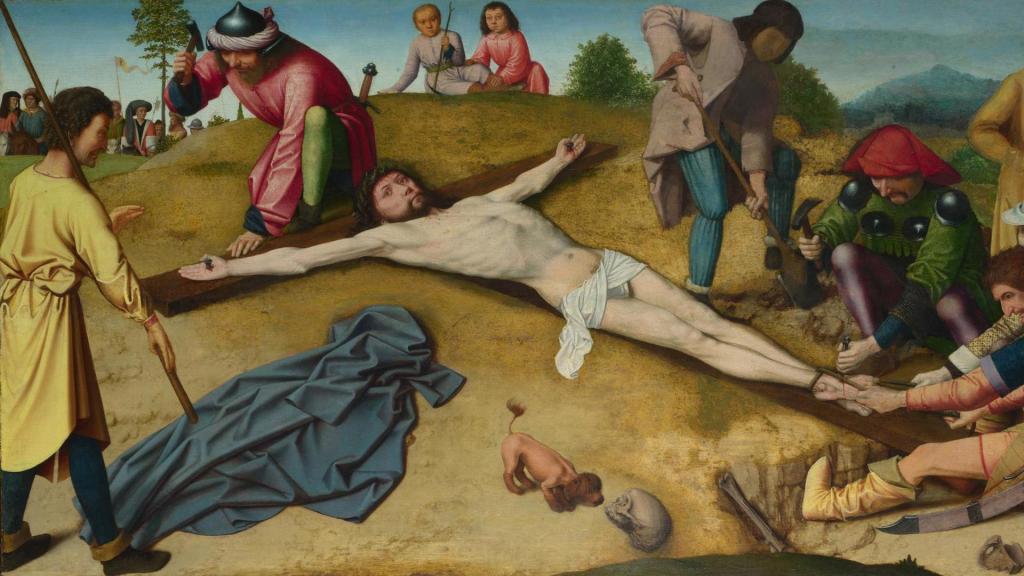
What kind of love is this? If these were his family, his friends, or his disciples he was forgiving for abandoning him we would call it great love. But what do we call it when you forgive the very ones that are nailing you to a cross of torture and shame that you in no way deserve? What sort of glory is needed for this? What overwhelming internal peace? Truly this is love beyond understanding.
Christian, how forgiven do you think you are? One way to answer this question is by asking, “How resurrected is Jesus? How alive is he?” Is Jesus fully alive? If so, it is only because he has fully satisfied our sin debt. The propitiation for our sins is complete as evidenced by Christ being completely raised from the dead – body, soul, and spirit.
Christian, how forgiven do you think you are? Another way to answer this question is to look at how you respond to your own guilt and shame. How much guilt are you carrying? What past mistake haunts you? How burned out are you on performance? What inter-personal penance are you trying to pay in order to appease your conscience? What about your shame? Does it dominate your life? Do you do good things just to cover up your felt “nakedness” with “fig leaves?”
Christian, how forgiven do you think you are? What about how well you forgive others? Remember, forgiveness is not forgetting the offense as if in denial. Forgiveness includes calling evil, evil. It leaves room for justice to enter in. But it also leaves room for reconciliation to take place.
And so I ask you, do you offer forgiveness and seek reconciliation with those who have hurt you? Do you offer unconditional forgiveness and restorative justice? These things are never easy. Forgiving can feel like you are simply choosing to live with your loss. It can feel like defeat. And in a sense it is. It is a denial of the self that makes room for the grace of God to do its work in you and in your offender.
God’s grace in you by the resurrection power of the indwelling Christ will slowly but surely crush your self-justification and your natural self-protection. How? Because grace is unconditional forgiveness. And unconditional forgiveness allows you to be ok with never receiving anything in return. No reciprocation. No amends. When you understand that in Christ there is nothing for you to lose forgiveness and the risk of seeking restoration becomes possible.
Christian, how forgiven do you think you are? Finally, we can answer this by looking at how we relate to God himself. Are you still trying to make retribution for your sins? Are you trying to “keep short accounts with God?” Christian, there is no account. The books are closed. The debt is forever satisfied. Paid in full. This means that the primary mechanism for growth in the Christian life is no longer the never ending cycle of sin and confession: sin, confess, repeat (see the book of Judges). Our confession does not produce God’s forgiveness. Our forgiveness is only through his blood. Not through our sincere words of contrition. Rather, it is God’s forgiveness that produces our confession. Because I am fully forgiven I am able to freely approach God and agree (confess) with God about my sin. This agreement does not pardon me. Christ’s shed blood pardons me. Period.
Forgiveness means that all of your sins have been sent away along with all the objective and subjective guilt that they bear. Yes, Christ is constantly at work in you to expose your sin and bring it into the light of redemption. But this is because he wants you to live in the freedom that your forgiveness has produced. God knows that only when we are truly forgiven can we face and fight our sin and pursue holiness. Only when we are truly forgiven can we live as Christ in this world.
You: How forgiven do you think you are? Does your life support your answer?
You in Christ: How does our forgiveness in Christ allow us to forgive others and even seek reconciliation, not from neediness but from fullness?
Christ in you: Is there someone that you need to offer forgiveness to today?
Prayer: Father, your forgiveness of me is proven by the fullness of Jesus resurrection. He is alive to you and so am I. Let your forgiveness of me empower my forgiveness of others. Amen.
 To Live is Christ