Mark 14:35-36. 35And going a little farther, he fell on the ground and prayed that, if it were possible, the hour might pass from him. 36And he said, “Abba, Father, all things are possible for you. Remove this cup from me. Yet not what I will, but what you will.”
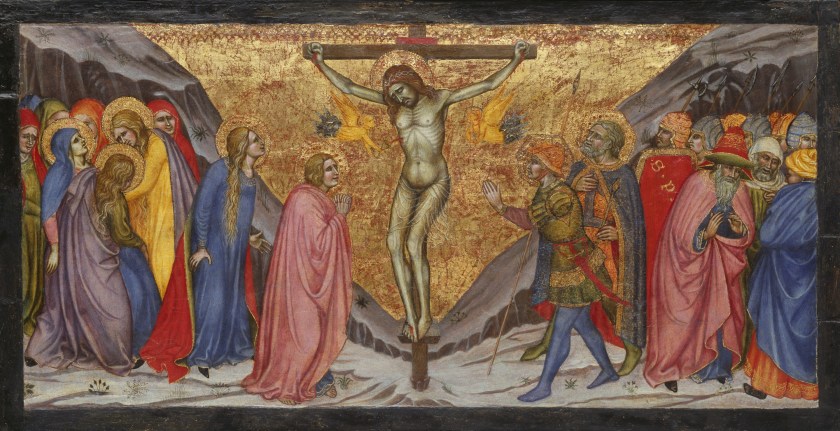
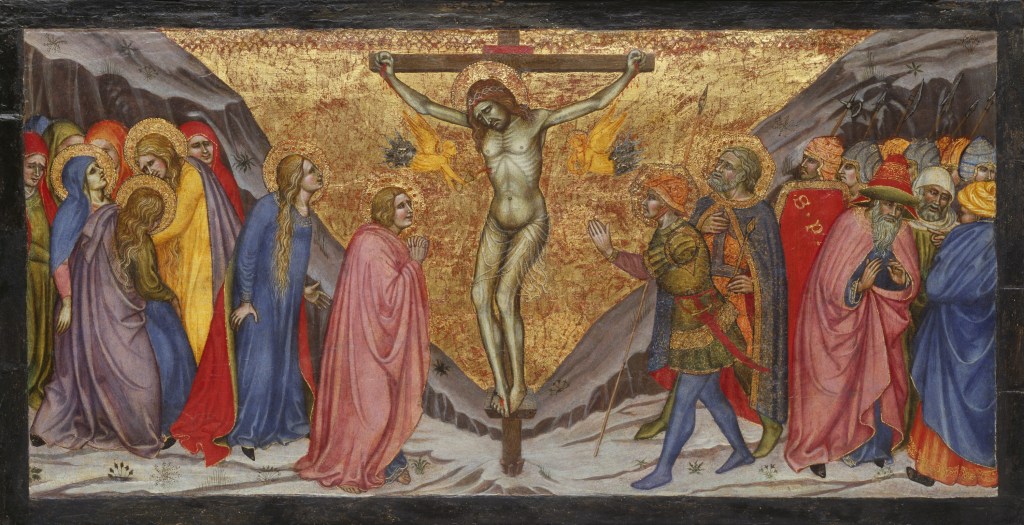
Mark 15:33-39. 33And when the sixth hour had come, there was darkness over the whole land until the ninth hour. 34And at the ninth hour Jesus cried with a loud voice, “Eloi, Eloi, lema sabachthani?” which means, “My God, my God, why have you forsaken me?” 35And some of the bystanders hearing it said, “Behold, he is calling Elijah.” 36And someone ran and filled a sponge with sour wine, put it on a reed and gave it to him to drink, saying, “Wait, let us see whether Elijah will come to take him down.” 37And Jesus uttered a loud cry and breathed his last. 38And the curtain of the temple was torn in two, from top to bottom. 39And when the centurion, who stood facing him, saw that in this way he breathed his last, he said, “Truly this man was the Son of God!”
Jesus never made it back to Bethany Thursday night. He didn’t intend to. He was up all night in the Garden of Gethsemane. By Friday morning he had been arrested and was on trial for his life. A trial he would choose to suffer and lose for you and me.
Jesus would be judged six times by an unrighteous human judge. Through it all, he was proven innocent, yet executed anyway. But the trials before the Sanhedrin, Pilate, and Herod were not Jesus’ only trials on Good Friday. Much greater was his seventh trial. The judgment of God. The all-knowing, heart discerning, Judge could find no flaw in Jesus. And yet he was forsaken by God and killed anyway.
But how? How is any of that fair? How is that justice?
Because Jesus chose it.
One of the things that Christ’s prayer in the Garden of Gethsemane teaches us is the dual nature of Christ. Jesus, in his incarnation, was one person but he had two natures. A divine nature and a human nature. By his divine nature, Jesus always wants everything that the Father wants – what you will be done. By his human nature, Jesus wants what every human being wants: air, food, safety, love, honor – Remove this cup from me.
In the garden both natures are on full display and both are equally important. In his humanity, Jesus had to submit to the Father, he had to actually choose to obey. He had to succeed where Adam had failed. This is the only way for him to be our substitute, our replacement, our sacrifice.
But Jesus had to die as more than just a man, he had to die as God too. He had to go to the cross willingly, from the divine will. The will he shares with the God-Head. Jesus wasn’t only submitting to divine authority when he went to the cross; he was choosing to go to the cross of his own free will, his divine will. This is what makes Christ’s death the greatest act of love ever known – Christ laid down his life for his friends (you and me).
Christ chose not only to submit to physical death, but he chose also to submit to the wrath of God. Christ chose to submit to God as his judge who poured out his wrath upon him in the form of the divine rejection of sin (My God, my God, why have you forsaken me?). In order to do this Christ had to become our sin (2 Corinthians 5:21), and our curse (Galatians 3:13). Now we can move from submitting to God as our divine judge to submitting to him as our loving caring Abba.
This is why there can be such gracious salvation and still justice. God didn’t overlook sin. He righteously and justly punished sin on the cross. Your sin and my sin. The sin of Adam and the sin of all humanity. Such justice had to happen for there to be salvation. What is wrong must be made right. Every offense must be dealt with for God to be holy. Especially each offense against a holy God.
The nature of God’s holiness is that it will ultimately destroy anything that opposes it. God will do whatever it takes to destroy any evil that would seek to destroy what he loves. That means anything that would destroy you and me must be destroyed. That includes all sin, injustice, oppression, violence, and hate. We are all victims.
But it also includes us. Because evil is wrapped up in all of us too. We aren’t just victim, we are victimizers. We are all destroyers. We are all oppressors. We are all unrighteous.
Therefore, for there to be justice and still salvation there has to be substitution. If God had poured out his just and loving wrath against sinful humanity without Christ as our substitute, none of us would survive. There would be no hope of salvation. But because Jesus cried out My God, my God, why have you forsaken me, because he suffered divine rejection in our place, we can experience divine reconciliation in him.
To be in Christ is to have this justice run through us. As both victim and victimizer Jesus died for sin. As both victim and victimizer we are free from sin’s effect. Now, as both victim and victimizer we can, by faith in Christ, experience restoration and justice. Justice that restores our righteousness. Justice that is our salvation.
You: in what ways do you tend to see yourself as only victim or only victimizer?
You in Christ: How does knowing that Jesus chose to die for you of his own divine will allow you to move forward with confidence today?
Christ in you: How can your life display both the grace of God and the justice of God today?
Prayer: Father, because you forsook Jesus on the cross you will never forsake me. Jesus thank you for willingly taking my place, my sin, my punishment. Thank you for protecting me from God’s justice while also giving me God’s righteousness. Amen.
 To Live is Christ