Genesis 1:31-2:3. 31And there was evening and there was morning, the sixth day. 1Thus the heavens and the earth were finished, and all the host of them. 2And on the seventh day God finished his work that he had done, and he rested on the seventh day from all his work that he had done. 3So God blessed the seventh day and made it holy, because on it God rested from all his work that he had done in creation.
Throughout Genesis 1, we hear this refrain over and over: There was evening and there was morning.
Since the beginning, man has been limited by the cycle of evening and morning – the 24-hour day. This cycle forces us to rest. To Sabbath. To face our limits. We were not made for perpetual work. Why not? Because we are finite not infinite. In fact, nothing created by God is infinite, only God the Creator is without limits. Yet, even our infinite God rested.
Why? Clearly God was not tired. A God who is infinite in power can’t be tired. God did not need to rest; he chose to rest. He chose to end his creation work, to keep it finite. To picture this, he gave each day a clear beginning and end. For the Hebrews the day began in the dark and ended in the light – evening and then morning. This pattern mimics creation, light entering the dark and overpowering it, each day filled with new morning mercies. Light comes to us, we do not create it ourselves, it is the gift of God.
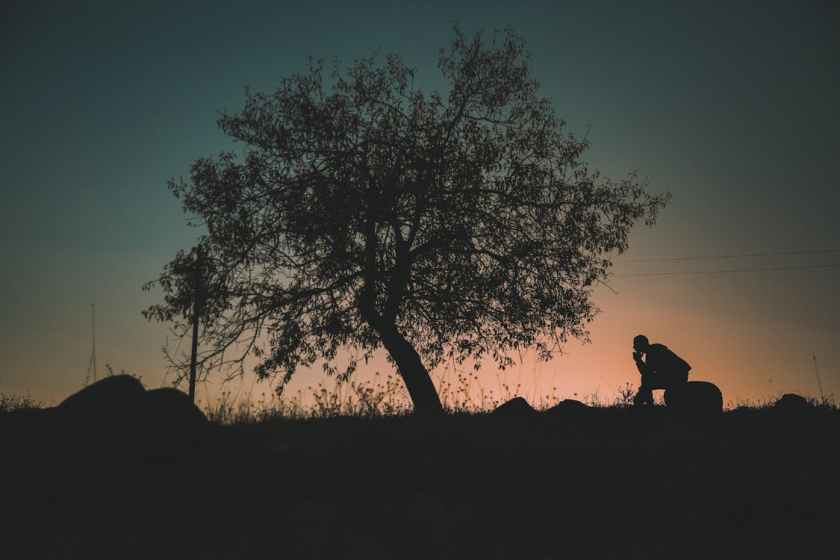
And so is the dark. The setting sun is as much a gift to us as the rising sun. The beauty of sunset reminds us of our need to rest from all our labor, to simply enjoy the labors of the day. To Sabbath. The dark reminds us of our limits. Physically, the dark of night is meant to force us to take a break and to get the sleep we so desperately need. Spiritually, it is meant to bring us to the throne of God in gratitude and faith as we lie in our beds at the end of another day of enjoying God’s grace.
Psalm 4:8. In peace I will both lie down and sleep; for you alone, O Lord, make me dwell in safety.
Being reminded of our finitude with each setting sun also reminds us that our work is not what gives us our value or meaning. Yes, our work images God, but so does our rest. If God himself limits his production and consumption, then what does that tell us? No, I’m not asking a rhetorical question. It tells us that God is at the center of the universe, not our production. Not everything that can be done, needs to be done or should be done. We must assume that God could have created many more things, but he didn’t. Could we do more? Sure. Should we? Maybe not, lest we think the universe revolves around us.
Notice that the seventh day does not conclude with the usual refrain. For the first time in six days we do not hear that the “evening and the morning” were the limits of the seventh day. Again we are left asking why? Why does Genesis 2:3 seem to suggest that the seventh day had no end? Because God’s state of rest has not ended. God’s ex nihilo creation work has stopped forever, never to resume. Yes, God is still working, but he is working from a state of rest. We rest from our work, but God works from his rest. A rest that is eternal.
All of this points to Christ and his work on the cross, a finished work. When Jesus cried, “It is finished” on the cross, he entered into a state of rest. A Sabbath that has him seated on Heaven’s throne. What does this mean? It means the New Creation work that has been applied to your life in Christ is a completed, once for all time, work. But unlike his work in Genesis 1, this work has made you spiritually infinite. Unlimited in your capacity to experience God and his infinite love. Unlimited in what the Spirit can do in and through you. Unlimited in joy. Unlimited in peace. Unlimited in rest.
Questions: In what ways can your earthly limitations remind you of God’s sovereign grace? As God’s New Creation, you are complete and spiritually infinite in Christ. How does this truth change your perspective on who you are? What would working from rest look like for you today?
 To Live is Christ